Building on the success of its first cycle, I-CAN Sync continues to advance applied research that connects science, policy, and local action. The Collaborative Study Program Round 2 (2025–2026) focuses on how Nature-based Solutions (NbS) can strengthen Indonesia’s efforts toward socio-economically and environmentally sustainable land and forest management, with a particular focus on peatland and mangrove ecosystems, critical habitats for biodiversity, carbon storage, and community livelihoods.
This round invites collaborative research proposals exploring how NbS can support Multipurpose Forestry Businesses (Multi Usaha Kehutanan) and Social Forestry (Perhutanan Sosial). The studies aim to generate actionable knowledge and innovative approaches that integrate NbS into sustainable forestry and land-use strategies, aligning ecological restoration with inclusive economic growth.
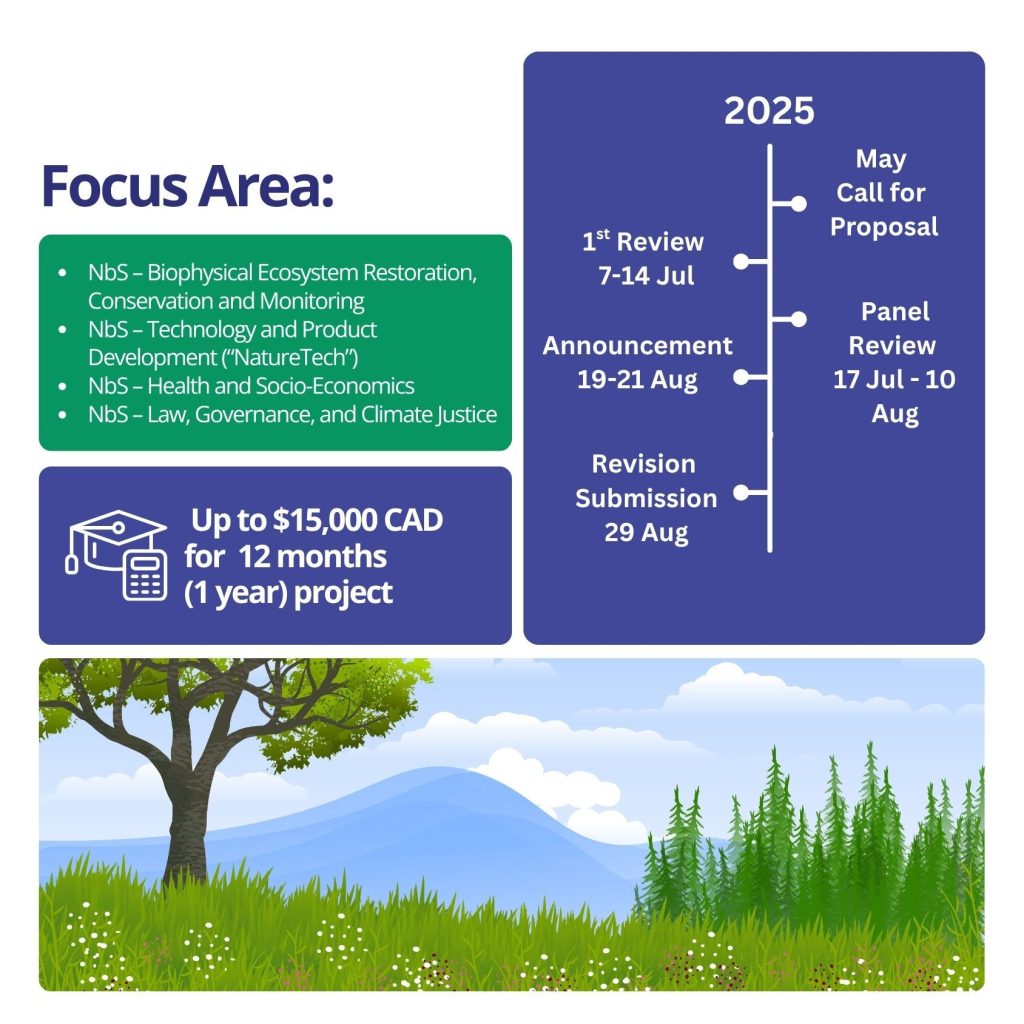
Research themes span a broad spectrum, from ecosystem restoration and monitoring using AI, drones, and remote sensing, to “NatureTech” innovations that transform biological resources into sustainable bioenergy, biomaterials, and bioactive products. Other studies explore community-based business models such as blue-carbon initiatives, ecotourism, and agroforestry, while social research addresses law, governance, and climate justice, including land tenure, customary rights, and gender equity in natural resource management.
From Jambi’s peatlands to the coasts of Java and the mangrove villages of Indonesia’s archipelago, the studies under Round 2 of the Collaborative Study Program continue to showcase the power of Nature-based Solutions through:
1. Triple-B Approach: Developing Climate-Resilient Silvofishery through Biodiversity, Blue Carbon, and Sustainable Business in Pangkal Babu, Jambi Province
Led by Achmad Fadillah, SE., M.Sc., Ph.D.
This study brings together biodiversity conservation, blue carbon management, and sustainable aquaculture under one integrated model. By advancing the “Triple-B” approach — Biodiversity, Blue Carbon, and Business — the research aims to build a climate-resilient silvofishery system that strengthens local economies while restoring mangrove ecosystems in Jambi.
2. Strengthening Community Resilience to Forest and Land Fires in Jambi Area: Co-Developing Local Knowledge and Simple Tools for Sustainable and Inclusive Solutions
Led by Lailan Syaufina
In fire-prone areas of Jambi, this project works hand in hand with local communities to combine indigenous knowledge and modern science. By co-developing practical tools for early detection and fire management, the team empowers communities to prevent and respond to forest and land fires more effectively — turning local experience into climate resilience.
3. Ecological and Socio-Economic Integration: Introduction of Mud Crabs (Scylla spp.) for Mangrove Function Restoration with Community Involvement in Muara Gembong, Bekasi, West Java
Led by Sulistiono
In the mangrove-fringed estuaries of Muara Gembong, this study explores how reintroducing mud crabs can help restore ecosystem balance and improve community livelihoods. The project combines ecological restoration with socio-economic inclusion, showing how biodiversity and business can thrive side by side.
4. I-ENGAGE: Integration of Ecosystem Service Values to Increase Community Engagement in Mangrove Rehabilitation Programs
Led by Fery Kurniawan
I-ENGAGE focuses on bridging the gap between ecosystem valuation and community participation. By integrating the economic, ecological, and cultural values of mangroves into rehabilitation efforts, the research strengthens public awareness and engagement, ensuring that conservation becomes a shared responsibility and source of local pride.
5. Sediment Deposition and Coastal Morphodynamics: Implications for Mangrove Conservation in the Indramayu Coastal Zone
Led by Dr. Yudi Setiawan, SP., M.Env.Sc.
In Indramayu’s dynamic coastal landscape, this study investigates how sediment movement and coastal morphodynamics influence mangrove health. The findings will guide more effective conservation and restoration strategies, ensuring that mangrove ecosystems can adapt to shifting shorelines and ongoing environmental change.
6. Sustainable Bioethanol Development from Nipa (Nypa fructican) Sap for Community Livelihood Enhancement in Cilacap Regency, Central Java, Indonesia
Led by Dwi Setyaningsih
This project transforms the overlooked potential of nipa palms into a renewable energy opportunity. By developing sustainable bioethanol from nipa sap, the research supports green innovation while opening new livelihood pathways for coastal communities in Cilacap — linking clean energy with inclusive economic growth.
7. NbS-based Multi-Enterprise Forestry Governance: Analysis of Climate and Gender Justice in the Peatlands of Pasir Village
Led by Melani Abdulkadir-Sunito
Focusing on the peatlands of Pasir Village, this study examines how Nature-based Solutions can be implemented through multi-enterprise forestry while ensuring climate and gender justice. It brings together local governance, equity, and sustainability — ensuring that conservation benefits are shared fairly among all community members.
Through this new round of collaboration, I-CAN Sync reinforces Indonesia’s leadership in evidence-based, inclusive, and sustainable NbS research. By uniting scientists, policymakers, and communities, the program demonstrates how working with nature can drive climate resilience, social prosperity, and long-term ecological balance.